Categories
2025 College Hockey Recruiting Women's College Hockey Women's Hockey

Your NCAA Women’s Hockey Recruitment Video: What Coaches REALLY Want to See

Aspiring to play NCAA women’s hockey? Your recruitment video is a key piece of the puzzle, but what exactly are college coaches looking for? We recently surveyed both D1 and DIII women’s hockey coaches for their specific video-submission preferences to give you the inside scoop. Forget the guesswork – here’s what you need to know to make your video stand out.

Keep It Concise: Less Than 6 Minutes is Key

First and foremost, keep your video submission under 6 minutes. Coaches are busy, and a succinct, impactful video is far more likely to be watched in its entirety. This isn’t the time for a lengthy highlight reel; focus on quality over quantity.

Video: Helpful, But Not the Only Factor

While your video is “somewhat important,” coaches emphasized that it’s helpful but not critical for their initial evaluation. Think of it as a strong supporting document that complements your athletic profile and academic achievements. It’s a tool to get you noticed, not the sole determinant of your recruitment.

What Kind of Footage Do They Prefer?

This is where many players go wrong. Coaches overwhelmingly prefer full game shift-by-shift footage with selected shifts from multiple games (e.g., 10-15 shifts). They want to see you in real-game scenarios, demonstrating your hockey sense and decision-making under pressure.

What to avoid? Tightly edited highlight reels with just goals or flashy plays. Coaches want to see the full sequence of play, not just the spectacular finish. This provides a much more accurate representation of your abilities.

How to Submit Your Video

The preferred methods for submission are straightforward: YouTube, Hudl, or Instat. Providing a profile/channel link or a direct email attachment (e.g., an .mp4 file) are both acceptable. Note: Coaches made it clear that they will almost always watch your videos via another service if you’re already in that system.

When to Submit

Consistency is important. Aim to submit new video during recruiting season every 1-3 months. This keeps coaches updated on your progress and reminds them of your interest.

Special Considerations for Goalies

Goalies, pay close attention! Coaches want to see a mix of both full games and a highlight reel. Critically, they prefer gameplay highlights over practice sessions. When it comes to the content, they’re looking for a breadth of skills, including:

  • Rebound control
  • Puck handling
  • Odd Man Rushes
  • Net Front Scrambles
  • High Danger Shots

Perhaps the most surprising insight for goalies: coaches find it helpful to show clips where you let in a goal but demonstrate strong fundamentals. This shows resilience, good technique even in challenging situations, and provides a more realistic assessment of your abilities than only showing perfect saves.

In Summary:

  • Length: Under 4 minutes.
  • Importance: Helpful, but not critical for initial evaluation.
  • Content: Full game shift-by-shift with selected shifts from multiple games (20-30 shifts). Full sequence clips, not just highlights.
  • Method: YouTube/Hudl/Instat link or direct email attachment. But know that coaches will review their own subscriptions service like Hudl/Instat to watch your footage.
  • Frequency: Every 1-3 months during recruiting season.
  • Goalies: Mix of full games & highlight reel, game play preferred, include clips demonstrating strong fundamentals even if a goal is scored.

By following these guidelines, you can create a recruitment video that truly resonates with Division 1 women’s hockey coaches and helps you take the next step in your athletic journey. Good luck!

READ MORE ON THIS TOPIC:

How to Create Player Videos for Recruiting

What Are The 3 Types of Recruiting Videos Coaches Want to See?

Creating Player Videos: Sourcing Game Footage For Highlight Reels

Creating Player Videos: How to Edit Video for Recruiting Highlight Reels

Creating Player Videos: Where to Post Your Recruiting Highlight Reels


🚨Champs App Profile 2.0 is Here – With Videos, References & More!

🎥 Upload Videos Directly

No need to upload to YouTube first! Just drag and drop video files straight into your profile. You can now also add Vimeo links in addition to YouTube.

Categories
2025 Men's College Hockey NCAA DI Commits Women's College Hockey

The NCAA Settlement: Practical Impacts on Division I Ice Hockey Rosters and Scholarships

The recently approved NCAA House settlement is poised to fundamentally reshape collegiate athletics, and its impact on Division I men’s and women’s ice hockey programs will be significant. While many details are still emerging, the core changes revolve around athlete compensation, scholarship flexibility, and roster limits.

Understanding Scholarship Flexibility

For schools that opted into the NCAA House settlement, a critical change is the newfound flexibility in offering athletic scholarships. Previously, strict scholarship caps limited teams. Now, if a Division I hockey team cannot afford to offer the maximum of 26 full athletic scholarships, they have the discretion to offer fewer.

This flexibility stems from several key aspects of the settlement:

  • Roster Limit as a Maximum: The 26-player roster limit for Division I ice hockey is an absolute maximum. It dictates the highest number of players a team can have on its active roster, not a minimum or a mandated number of scholarships. Teams are not required to fill all 26 spots, nor are they required to offer full scholarships to all players on their roster.
  • Equivalency Scholarships: Under the new system, all athletic scholarships are “equivaency scholarships.” This grants schools the ability to:
    • Offer Partial Scholarships: For instance, instead of two full scholarships, a school might offer four half-scholarships.
    • Mix Full and Partial Scholarships: Teams can create a blended approach, with some players receiving full scholarships and others partial aid.
    • Offer Fewer Overall Scholarships: A school might decide that its budget allows for only 15 full scholarships, even if it carries 22 players on the roster. The remaining players would either be true walk-ons (receiving no athletic aid) or receive very small partial scholarships if financial resources permit.
  • Budgetary Constraints: The settlement introduces an annual cap on the total amount of revenue a school can share directly with athletes, starting at approximately $20.5 million for the first year. This cap includes scholarship costs that exceed previous limits. For many institutions, particularly those outside the major revenue-generating conferences, fully funding 26 scholarships for a hockey team in addition to other sports, while remaining within this overall cap, will present a significant financial challenge. Strategic decisions on fund allocation across all sports will be essential.
  • Strategic Roster Management: Coaches and athletic departments will need to balance their desired roster size for competitive reasons with their financial realities. Some may opt for a smaller, more highly funded roster, while others might spread aid among more players if their budget allows for a greater number of partial scholarships.

In summary, while the settlement removes the old scholarship caps and permits up to 26 scholarships for hockey, it does not mandate that a school must provide 26. Each institution will make its own decisions based on its financial capacity and athletic priorities.

The “Grandfather Rule” Exception

An important caveat to the strict roster limits is the “grandfathering” provision. Current or incoming 2025-26 student-athletes who were already on a roster or had a promised spot and would otherwise be cut due to the new limits are designated as “Designated Student-Athletes.” These individuals do not count against the 26-player limit for their remaining eligibility at their original institution or any transfer institution. However, once these players complete their eligibility, the strict 26-player cap will apply, reinforcing that the new system streamlines roster management: the number of players a team can carry is now the number they can offer aid (including scholarships and direct payments) to, up to that specific sport’s roster cap.

Schools Not Opting In

While the vast majority of Division I schools opted into the settlement (approximately 319 out of 389), some notable exceptions relevant to hockey exist:

  • The Ivy League: All eight Ivy League institutions, including their six hockey schools, have opted out. This decision aligns with their longstanding model of not awarding athletic scholarships or providing direct athletic compensation.
  • Military Academies: Institutions like Air Force and Army have opted out due to military rules that prevent their cadets from receiving Name, Image, and Likeness (NIL) compensation.
  • Other Hockey Programs: Certain other Division I hockey programs, such as Nebraska-Omaha, also chose not to opt in, often citing financial considerations or a desire to observe how the new system unfolds before committing.

Impact on Women’s Ice Hockey

The new rules could be beneficial for women’s hockey. Traditionally, women’s hockey teams have averaged around 25 roster spots. The new 26-player cap is very close to this average, suggesting less drastic changes in immediate roster size. This consistency may alleviate concerns about increasing roster sizes potentially forcing players into unhealthy competition for ice time or risking being healthy scratched.

However, schools like Sacred Heart, which have historically maintained larger women’s hockey rosters (sometimes exceeding 30 players), will face a significant adjustment. While the grandfather rule will mitigate immediate impacts for current players, these programs will see a necessary decrease in their roster size for future recruiting classes as the grandfathered players cycle out.

Impact on Men’s Ice Hockey

The new rules are expected to have a more pronounced impact on decreasing roster sizes in men’s hockey. On average, men’s teams have historically carried around 29 players. Given that men’s hockey tends to have more injuries than women’s hockey, larger rosters were often maintained to provide depth.

Now, these rosters will shrink to the 26-player maximum. While the grandfather rule will offer a short-term buffer, this ultimately means the overall number of players participating in Division I men’s hockey will decrease, potentially from approximately 1,800 players to 1,600 players across the country.

This reduction in available spots is further compounded by the recent change allowing Canadian junior players, who were previously ineligible due to stipends, to now play college hockey. This new pool of eligible talent will intensify competition for the fewer available roster spots in Division I men’s programs.

Categories
2025 Women's Hockey

NCAA Dominance Shines at the 2025 PWHL Draft: A Look at the Top Programs

Last week, the hockey world turned its attention to the highly anticipated 2025 Professional Women’s Hockey League (PWHL) Draft, held on June 24th. As the league continues to solidify its place as the premier destination for elite female talent, the draft provided a fascinating snapshot of where the next generation of stars are coming from. Unsurprisingly, NCAA Division I programs once again proved to be the powerhouse pipeline, alongside a strong showing from European leagues.

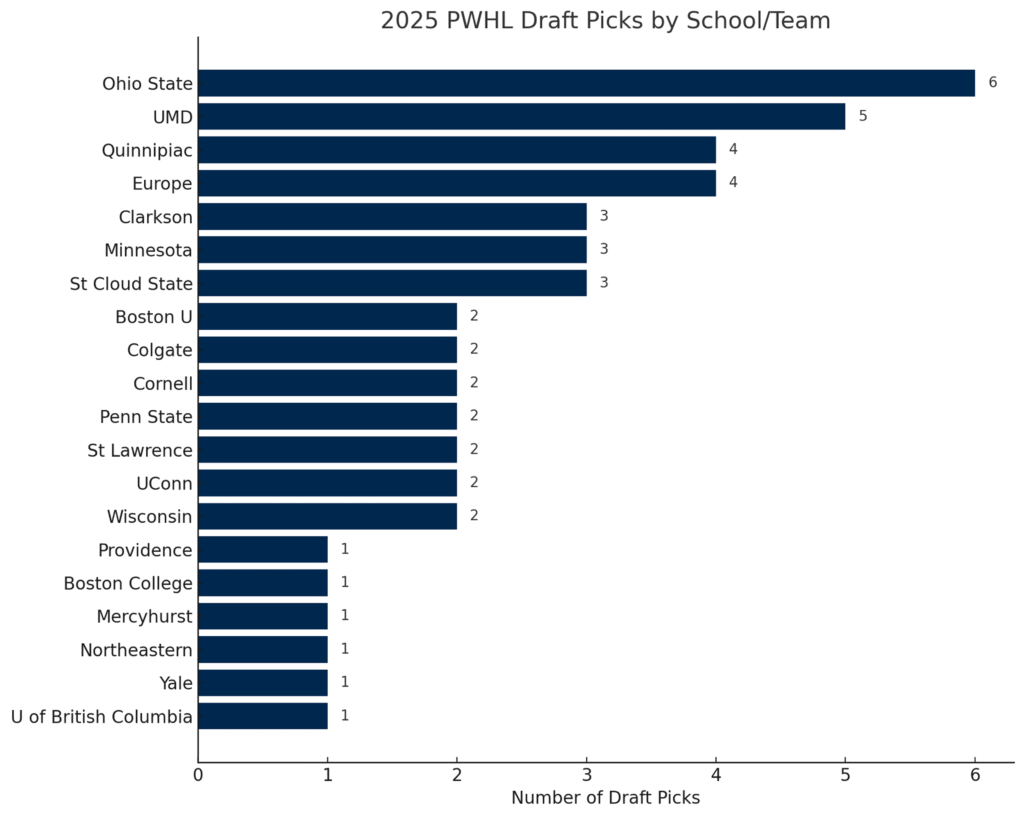
Leading the charge in player development was Ohio State University, which saw an impressive six of its athletes selected, showcasing the strength and depth of their program. Close behind, the University of Minnesota Duluth (UMD) celebrated five of its own making the leap to professional ranks, reinforcing their consistent high-level output.

Quinnipiac University had a phenomenal draft, with four players hearing their names called, a testament to their growing influence in women’s hockey. Following them with three draftees each were Clarkson University, the University of Minnesota, and St. Cloud State University, highlighting the continued excellence across multiple conferences.

The draft also recognized talent emerging from beyond North American collegiate play, with three players selected directly from European leagues, emphasizing the global reach of the PWHL.

Further contributing to the NCAA’s robust representation, a strong contingent of programs each had two players drafted: Boston University, Colgate, Cornell, Penn State, Providence, St. Lawrence, UConn, and Wisconsin. Rounding out the selections were Boston College, Mercyhurst, Northeastern, and Yale, each celebrating one draftee.

Please note: The numbers above reflect the last college or university the drafted player attended. Schools like Wisconsin, Penn State, New Hampshire and Brown had drafted players transfer out prior to this past season.

Categories
2025 Coaching Women's College Hockey Women's Hockey

Who Will Replace Brian Idalski as Head Coach of St. Cloud State Women’s Hockey?

St. Cloud State Women's Hockey

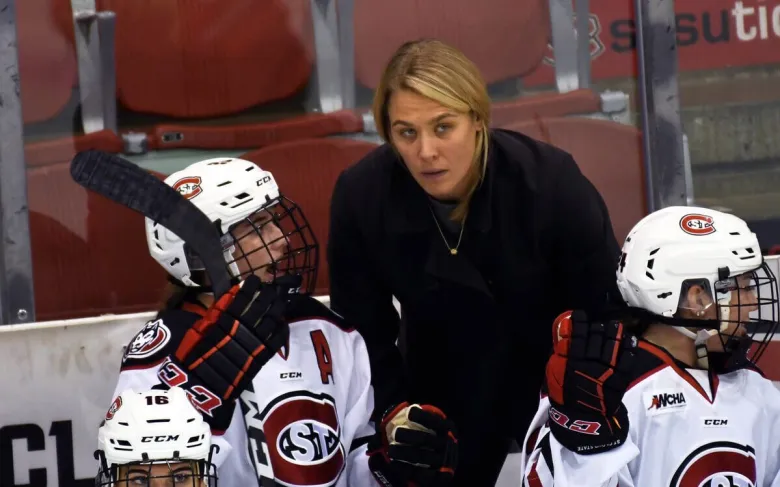
With the surprise announcement that Brian Idalski will be leaving St. Cloud State to become the inaugural head coach of PWHL Vancouver, the Huskies face a critical decision. Idalski helped elevate the program’s competitiveness in the WCHA during his tenure, and his successor will be tasked with maintaining that upward trajectory. Here’s a breakdown of the leading candidates to take the reins—and how their credentials stack up in 2025.

After successfully including Courtney Kessel in our list of candidates for the Princeton head coaching role, let’s see how we do on this analysis:

🔝 Leading Contenders

Jinelle Zaugg‑Siergiej

  • Current Role: Associate Head Coach, St. Cloud State (2019–present)
  • Why She’s a Top Choice:
    A silver medalist with Team USA (2010) and two-time NCAA champion at Wisconsin, Zaugg‑Siergiej has been a steady hand behind the bench for the past six seasons. She knows the program inside and out, has strong relationships with current players and recruits, and would provide continuity at a time of transition. She has never been a head coach, but she’s well-positioned to step up.

Mira Jalosuo

  • Current Role: Assistant Coach, PWHL Minnesota (2023–present)
  • Why She’s a Top Choice:
    After spending the 2022–23 season as an assistant at St. Cloud, the Finnish Olympian joined Ken Klee’s staff in the PWHL and helped guide Minnesota to back-to-back Walter Cup championships. Known for her defensive acumen and elite playing background, Jalosuo brings both credibility and a championship mentality. Her return would inject high-level tactical knowledge and energy into the program.

Molly Engstrom

  • Current Role: Head Coach, University of Maine (since 2022)
  • Why She’s a Top Choice:
    A former assistant at St. Cloud State (2018–2022) and two-time U.S. Olympian, Engstrom has transformed Maine into a defensively responsible team. She was one of three finalists for the St. Cloud State job in 2022 before Idalski was ultimately hired. Her success at Maine and familiarity with SCSU make her a very attractive candidate—if she’s interested in returning.

Erik Strand

  • Current Role: Assistant Coach, University of Vermont (since May 2025)
  • Why He’s a Top Choice:
    Strand was also a finalist for the SCSU head coach role in 2022. Prior to joining Vermont, he spent 10 years as head coach at UW–Eau Claire, guiding the DIII program to consistent success, including multiple NCAA tournament appearances and conference championships. A veteran of player development and known for his high-character leadership, Strand is ready for the Division I spotlight.

🔁 Long-Shot Options

Jeff Giesen

  • Current Role: Associate Head Coach, Minnesota State
  • Why He’s Notable:
    Giesen was St. Cloud State’s head coach from 2006 to 2014, leading the team through eight seasons. While he’s been at Minnesota State for nearly a decade, his familiarity with the Huskies’ program and the WCHA landscape gives him a theoretical path back—though it’s unclear whether he’s looking for a return to head coaching.

Britni Smith

  • Current Role: Head Coach, Syracuse (since 2022)
  • Why She’s Notable:
    A former Clarkson assistant and Hockey Canada coach, Smith has turned around Syracuse’s program in the CHA. While she’s respected as a rising leader, her current commitment at Syracuse may keep her focused out east.

Nick Carpenito

  • Current Role: Associate Head Coach, Northeastern
  • Why He’s Notable:
    A key architect of Northeastern’s success over the past decade, Carpenito is highly respected in NCAA circles. A jump to head coach in the WCHA would be a bold but potentially rewarding move—for both sides.

Greg May

  • Current Role: Associate Head Coach, Minnesota (joined July 2023)
  • Former Augsburg University DIII Head Coach (Sept 2021–July 2023), where he led the team to back-to-back NCAA Division III appearances and MIAC titles with a 41–15–2 record
  • Named an assistant coach for the 2026 U.S. Women’s U18 National Team
  • Why He’s Notable: Proven leadership at DIII and college program building. Now adding national-team experience. A fresh, well-rounded external hire.

Dan Koch

  • Current Role: Assistant Coach, University of Wisconsin
  • Why He’s Notable:
    Koch has spent years in the powerhouse Wisconsin program, developing elite players. Like others on this list, he’d represent a fresh external hire with deep knowledge of what winning programs look like.

🏁 Final Thoughts: Familiarity or Fresh Blood?

St. Cloud State has no shortage of qualified candidates, and their decision may ultimately come down to priorities:

  • If the goal is continuity, promoting Zaugg‑Siergiej or recruiting Jalosuo back from the pros makes the most sense.
  • If the program seeks a proven leader, Engstrom or Strand—both past finalists—are strong, familiar names with NCAA and program-building experience.
  • For a bold shake-up, external hires like Carpenito, Smith, or Koch could introduce a new culture and broader recruiting reach.

Whoever takes over will inherit a program on the rise and a passionate fanbase eager for sustained WCHA and NCAA success.

Categories
2025 Women's College Hockey Women's Hockey

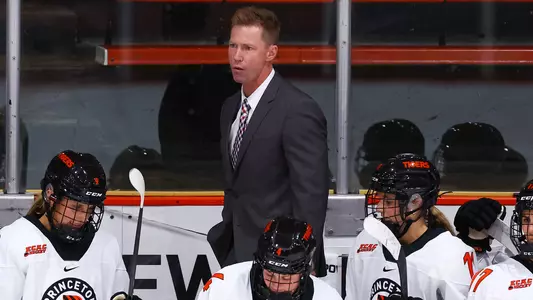
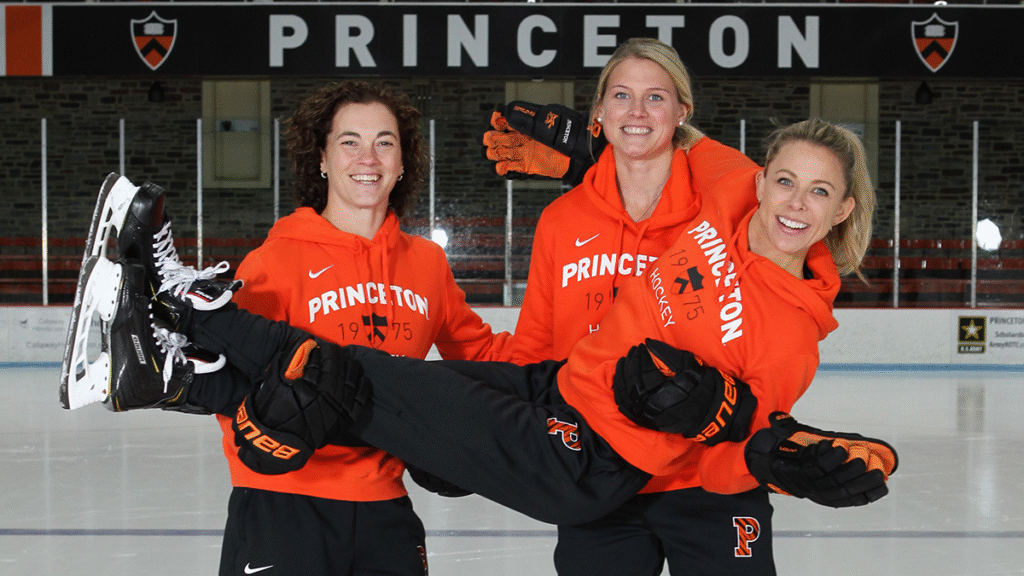
Who Will Be the Next Head Coach of Princeton Women’s Ice Hockey?

Last week, Princeton University officially posted the job opening to replace longtime Women’s Ice Hockey Head Coach, Cara Morey. Morey, who had helmed the program since 2017, has accepted a new opportunity as the General Manager of the newly formed PWHL Vancouver franchise. Her departure marks the end of a significant era at Princeton, and the search is now underway for her successor.

The next head coach of the Tigers will almost certainly have deep ties to the Ivy League — if not Princeton itself. With the unique demands of balancing elite athletics and academics, experience within this system is not just preferred; it’s practically essential.

A number of qualified candidates already stand out as possible hires, and several have previously been part of the Princeton program.

Shelly Picard is a prominent contender. Currently an assistant coach at Long Island University, Picard served as a Princeton assistant coach from 2021 to 2023. A former U.S. National Team player, Picard combines elite playing experience with Ivy familiarity, and her recent time with Princeton gives her valuable insight into the current roster and culture.

Jamie Lundmark, Princeton’s current Director of Player Development and Assistant Coach since the 2023-24 season, could be an internal hire. A former NHL forward, Lundmark has already earned the trust of the current team and staff. While his Ivy League experience is limited, his presence in the program could provide needed continuity after Morey’s departure.

Another compelling candidate is Kelly Nash, currently the Head Coach at Long Island University. Nash was an assistant at Princeton from 2017 to 2019, playing a key role in the program’s growth during that period. With recent head coaching experience and a past connection to the university, she checks many of the right boxes.

Mel Ruzzi, now the Head Coach at Brown University, also brings a strong resume. She served as an assistant at Princeton from 2019 to 2021 before taking the helm at Brown, where she’s made steady progress. Her current Ivy League head coaching experience could be a significant asset in the selection process.

Lee-J Mirasolo, the current Head Coach at Stonehill College, has a long history with Princeton as an assistant from 2011 to 2015. She also spent nearly a decade at Harvard. Mirasolo’s combination of head coaching experience and extensive Ivy knowledge could make her a strong fit.

Edith Racine, Associate Head Coach at Cornell since 2009, brings over 18 years of Ivy League coaching experience. Though she has never coached at Princeton, her long tenure at Cornell — and previous time at Brown — demonstrates her deep understanding of the Ivy hockey landscape.

Among the longer shots, two names stand out. Courtney Kessel, who recently took over as Head Coach of the PWHL Boston franchise, was Princeton’s assistant coach from 2019 to 2023. While her new pro role might make her unavailable, she’d be a dream hire if interested. Jeff Kampersal, now at Penn State and formerly Princeton’s head coach for over two decades (1996–2017), also fits the mold — but a return seems unlikely.

With such a strong pool of candidates who know the Ivy League inside and out, Princeton is well-positioned to find a leader who can build on Morey’s legacy and continue to elevate the Tigers on and off the ice.

Categories
Women's Hockey

The House v. NCAA Settlement: A Transformative Shift for College Ice Hockey

In a decision poised to reshape the landscape of collegiate athletics, a federal judge in California approved the House v. NCAA settlement on June 6, 2025, finalizing a multibillion-dollar agreement that introduces direct athlete payments, redefines scholarship structures, and addresses past inequities. This landmark class-action lawsuit, consolidating House v. NCAA, Carter v. NCAA, and Hubbard v. NCAA, marks a seismic shift from the NCAA’s long-standing amateurism model. For Men’s and Women’s Ice Hockey—sports cherished in pockets of the country but dwarfed by the revenue giants of football and basketball—the settlement brings both opportunity and uncertainty, particularly in the realms of scholarships and protections for current players.

A New Framework for College Sports

Effective July 1, 2025, the settlement permits Division I institutions to share up to $20.5 million annually with athletes, a figure derived from 22% of the average athletic revenue of Power 5 conference schools. This revenue-sharing cap, which will adjust upward yearly, allows schools to compensate athletes directly for the first time. Additionally, the agreement replaces traditional scholarship limits with roster caps, granting programs flexibility to distribute full or partial scholarships across their teams. Nearly $2.8 billion in back-pay damages will also be distributed to athletes who competed from 2016 onward, though ice hockey players are likely to receive modest sums compared with their counterparts in football and men’s basketball.

The transition to this new model requires schools to opt into revenue sharing by June 15, 2025, and designate athletes who can remain on rosters above the new caps—known as “grandfathered” players—by July 6, 2025. These provisions aim to ease the shift but have sparked debate, particularly in sports like ice hockey, where roster sizes and scholarship allocations are critical to maintaining competitive balance.

Scholarships: Flexibility with Risks

Historically, NCAA rules restricted Men’s and Women’s Ice Hockey programs to 18 scholarships each, often divided into partial awards to stretch limited resources. The House settlement dismantles these caps, allowing schools to offer scholarships to any number of players within the new roster limits, expected to range from 25 to 30 for ice hockey, pending final NCAA guidelines. This change offers a chance to deepen rosters and broaden access to the sport but introduces financial disparities that could reshape competition.

Wealthier programs, particularly those in Power 5 conferences, stand to benefit most. Schools like the University of Michigan or Boston University, with robust athletic budgets, could fund scholarships for an entire roster, giving them a recruiting edge over smaller programs in conferences like the ECAC or Atlantic Hockey. For instance, a program with ample resources might offer 30 partial scholarships, enhancing depth, while a less-funded school might struggle to support even 20. This financial divide threatens to widen gaps in conferences like Hockey East or the NCHC, where budget disparities already influence outcomes.

Women’s Ice Hockey, often operating with fewer resources, faces a dual-edged sword. The removal of scholarship limits could enable programs to attract more talent by offering partial awards to a larger pool of players, potentially narrowing the competitive gap with men’s teams. Yet, schools prioritizing revenue sports like football may allocate fewer resources to women’s programs, limiting their ability to capitalize on this flexibility.

Grandfathered Players and Roster Transitions

The shift to roster limits has been a flashpoint in the settlement’s rollout. Early proposals suggested caps as low as 20–25 players for ice hockey, far below the typical 25–30, raising fears that thousands of athletes could lose their spots. Following objections from players and a directive from Judge Claudia Wilken, the settlement now includes a grandfathering provision, allowing current athletes to remain on rosters above the new limits during a transitional period.

By July 6, 2025, schools must identify these grandfathered players, ensuring they retain their roster spots or scholarships temporarily without counting against the cap. For a Men’s Ice Hockey team with 28 players, for example, a school could designate several as grandfathered, preserving their eligibility for the 2025–26 season even if the roster limit is set at 25. Women’s teams, similarly, could protect players who might otherwise face cuts. This provision offers a lifeline to current athletes, many of whom feared being squeezed out by the settlement’s reforms.

Yet, the grandfathering process is not without flaws. The NCAA’s framework grants schools discretion over designations, meaning budget-conscious athletic departments might prioritize high-profile sports or incoming recruits over existing players. Some schools have already trimmed rosters in anticipation of smaller caps, and reintegrating cut players could strain resources for scholarships, room, and board. For ice hockey, where physical demands necessitate robust rosters, retaining grandfathered players is critical to maintaining competitiveness, particularly for women’s programs, which may receive less priority in revenue-sharing allocations.

The Road Ahead for Ice Hockey

The House settlement’s revenue-sharing model could intensify recruiting battles in ice hockey. Power 5 schools, flush with larger revenue pools, may lure top prospects with lucrative NIL deals and scholarships, challenging traditional powers like the University of North Dakota or Boston College. Restrictions on third-party NIL collectives, intended to curb pay-for-play schemes, may limit ice hockey players’ earning potential compared with athletes in revenue-driven sports.

Still, the settlement’s scholarship flexibility could democratize access to ice hockey, enabling more players to receive financial support. Smaller programs, however, risk falling behind if they cannot match the financial commitments of wealthier rivals. The grandfathering provision offers temporary relief, but its discretionary nature underscores the uncertainty facing current players, particularly in women’s programs, which may struggle for equitable treatment.

As college ice hockey navigates this new era, the House v. NCAA settlement promises to redefine the sport’s competitive and financial landscape. For players, coaches, and administrators, the challenge lies in balancing opportunity with equity in a system now driven by revenue and choice.

Categories
Women's College Hockey Women's Hockey

No Surprises in NCAA Women’s Hockey Championship Selections, Just a Few Seeding Twists

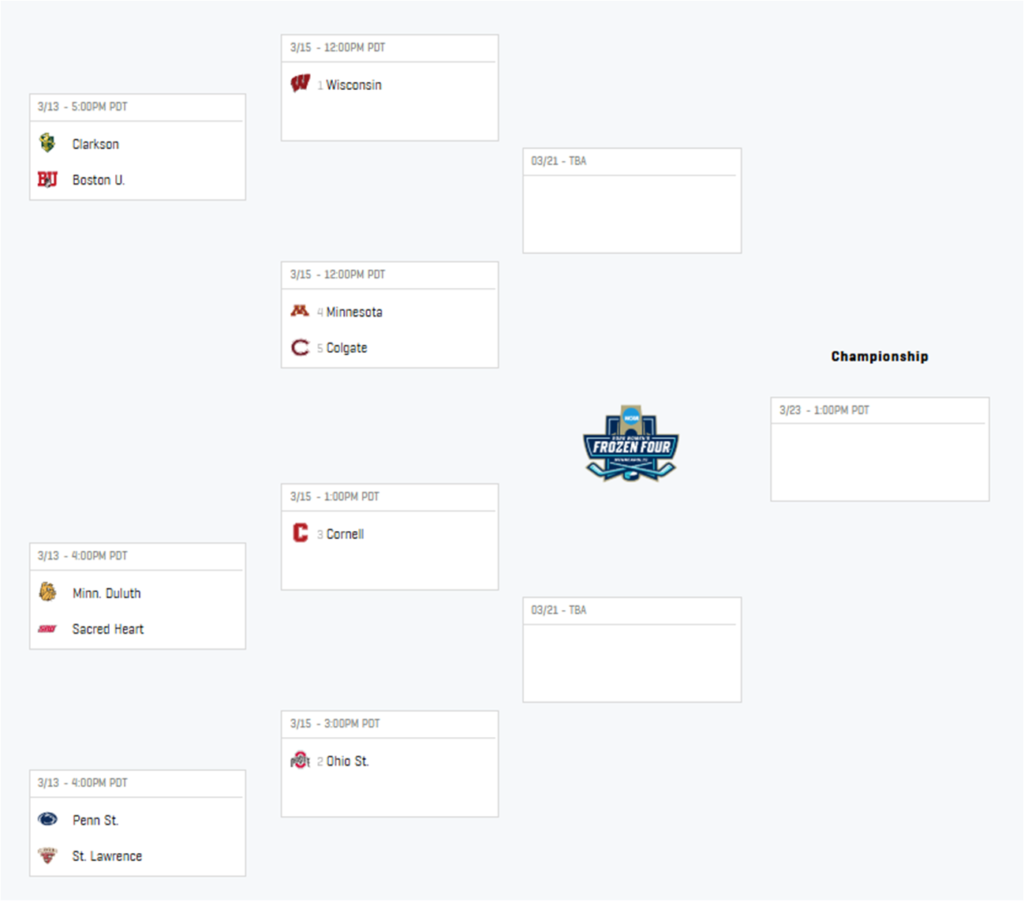
There weren’t any surprises in the 11 teams announced for the NCAA Women’s Hockey  Championship

There weren’t any surprises in the 11 teams announced for the NCAA Women’s Hockey  Championship.

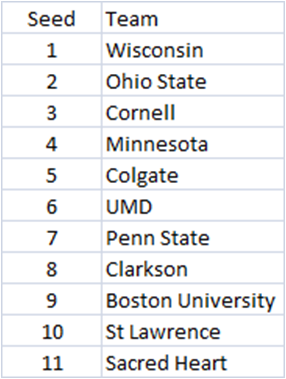
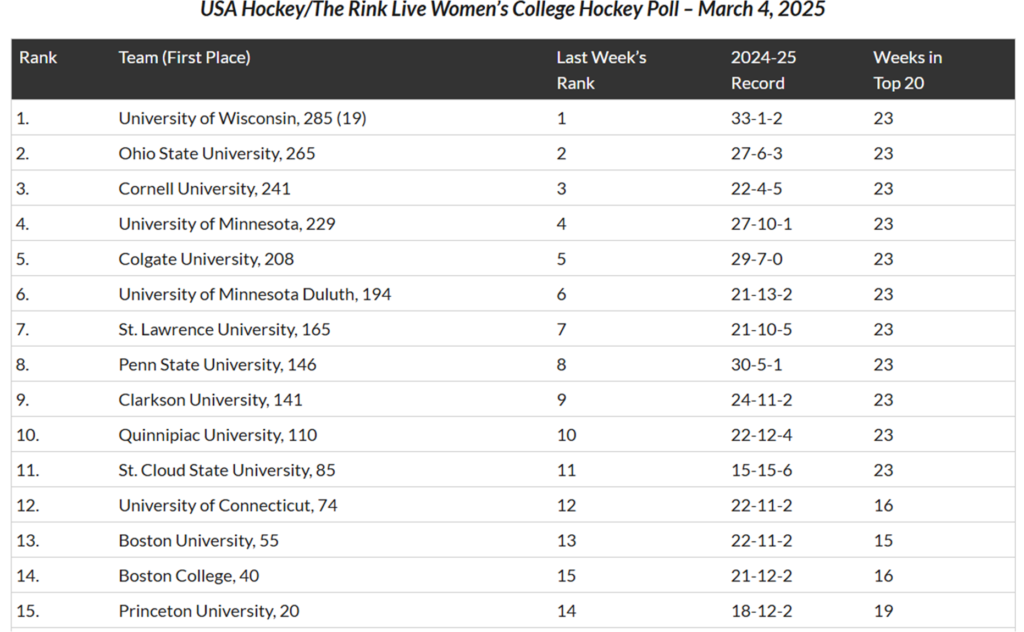
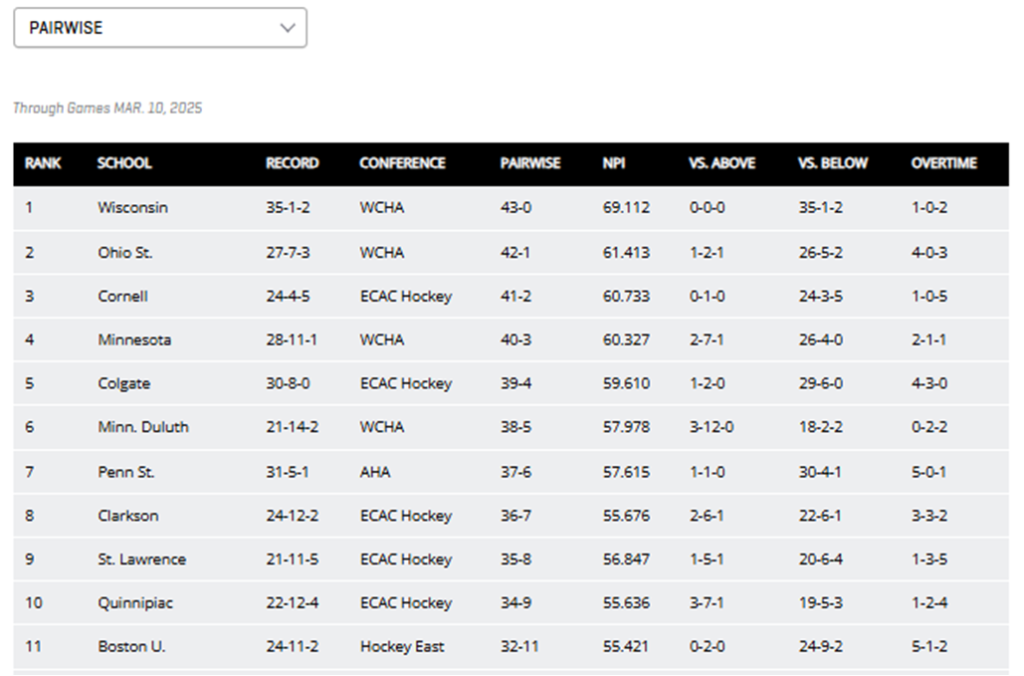
After the five conference winners, the remaining six at-large selection basically as expected based on the next highest ranked teams in the polls. All the teams selected were either from the WCHA (Ohio State, Minnesota & UMD) or the ECAC (Colgate, Clarkson & St. Lawrence).

The only team that maybe could have received an at-large bid was Quinnipiac, but at the end of the day, they didn’t beat Clarkson in the ECAC playoffs, so that removed their opportunity.

The only surprises were the conference upsets and seedings.

Congrats to Boston University and Sacred Heart, winning their championship even though they weren’t the top seed.

As for the seedings, they didn’t go exactly as I expected, but nothing I am really bothered about (unlike  last year when UMD should have had a higher seed and avoided Ohio State  in the second round). It seems the Pairwise ranking was given more weight than the Poll:

  • With Minnesota beating Ohio State in WCHA semi-finals, I thought the Gophers might get the #2 seed
  • I had Penn State as the #8 seed, but they ended up #7
  • I thought St Lawrence would be the #7 seed, but they ended up #10 – it’s possible the committee didn’t want an all-ECAC match-up vs. Clarkson meeting in the first round if SLU was ranked #8 or #9.

Best of luck to all the teams this week. I expect there to be a couple of upsets this weekend.

Categories
2025 Women's College Hockey

Predictable Playoffs? Analyzing the First Week of NCAA DI Women’s Hockey Postseason

I was paying close attention to the first week of the NCAA DI women’s hockey playoffs last week.  Of all the games that were played across the five conferences there were only 4 upsets. 

In the ECAC, the single upset was Union (#9) beating Brown (#8) for their first ever playoff win. It was a mild upset, given that the two programs were only separated by 5 points and 1 win in the ECAC standings.   Otherwise, all the other match-ups went according to higher team in the standings.

For Hockey East, Merrimack (#10) has the biggest upset, beating New Hampshire (#7) in their first round game 3-1.  Given the Pairwise and MyHockeyRankings, this was a bit of a surprise. However, in the next round, the only lower ranked team to win was Northeastern (#5) beating Providence (#4).  Only 3 points and 1 win separated these two teams and Northeastern was actually ranked higher than Providence in both the Pairwise (#15 vs #20) and MyHockeyRankings (#17 vs #21).

A nice surprise was seeing Post (#6) beat Franklin Pierce (3) in the opening round of the NEWHA playoffs.  Post has not had much success in recent years, but with new head coach Pat Bingham, the team advanced to its first-ever semi-finals today vs. Long Island University. Nice to see the program finally get over the hump.

There were no upsets in the advancing teams in the WCHA and AHA conferences, although Minnesota State and Syracuse each won a game in the best-of-3 series.

The lack of major surprises suggests that regular-season performance remains a strong predictor of playoff success. As the playoffs continue, it will be interesting to see if any lower-seeded teams can break through and challenge the favorites.

Categories
College Hockey Recruiting TOOLS Women's Hockey

Champs App Messaging 2.0

“It was truly exciting to see that a coach actually read the email and you were not left wondering if the message disappeared into the college hockey recruiting abyss.”

–  Messaging Tool User

Champs App Messaging is the fastest, easiest way to connect with coaches—and now it’s even better! Now Champs App Messaging has all the features from our original release and new capabilities that will make your recruiting process even smoother.

Why Use Champs App Messaging?

  • Cuts email time by over 50%
  • Ensures key info is included
  • Reduces errors with pre-filled templates
  • Saves time, improves accuracy & gives you valuable insights
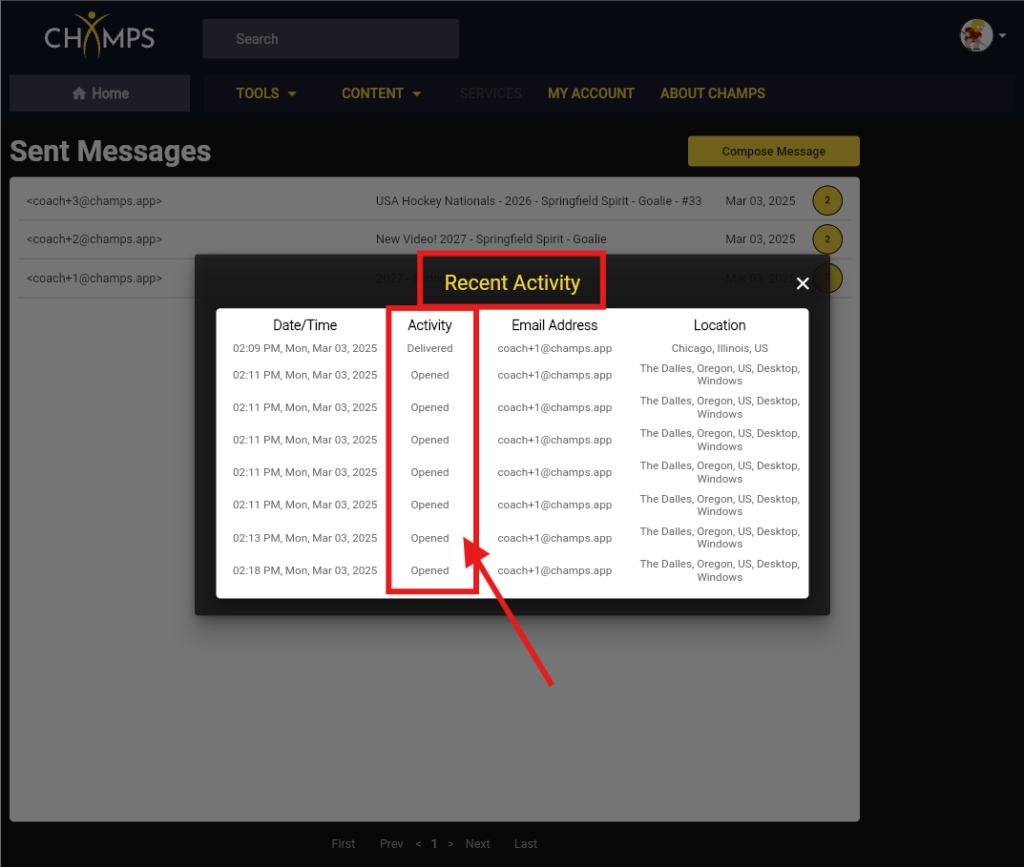
  • Track when and how often coaches open your email

 “16 emails would have normally taken her an entire evening. She was able to do this in well under 2 hours. The app is incredibly user-friendly and easy to navigate.” – Champs App Messaging User

If you’re sending 50+ emails or 10 at a time, Champs App Messaging is a game changer. Give it a try and make recruiting faster, smarter, and more effective!

Try Champs App Messaging 2.0 Now!

Here are the New Features to Take Your Recruiting to the Next Level:

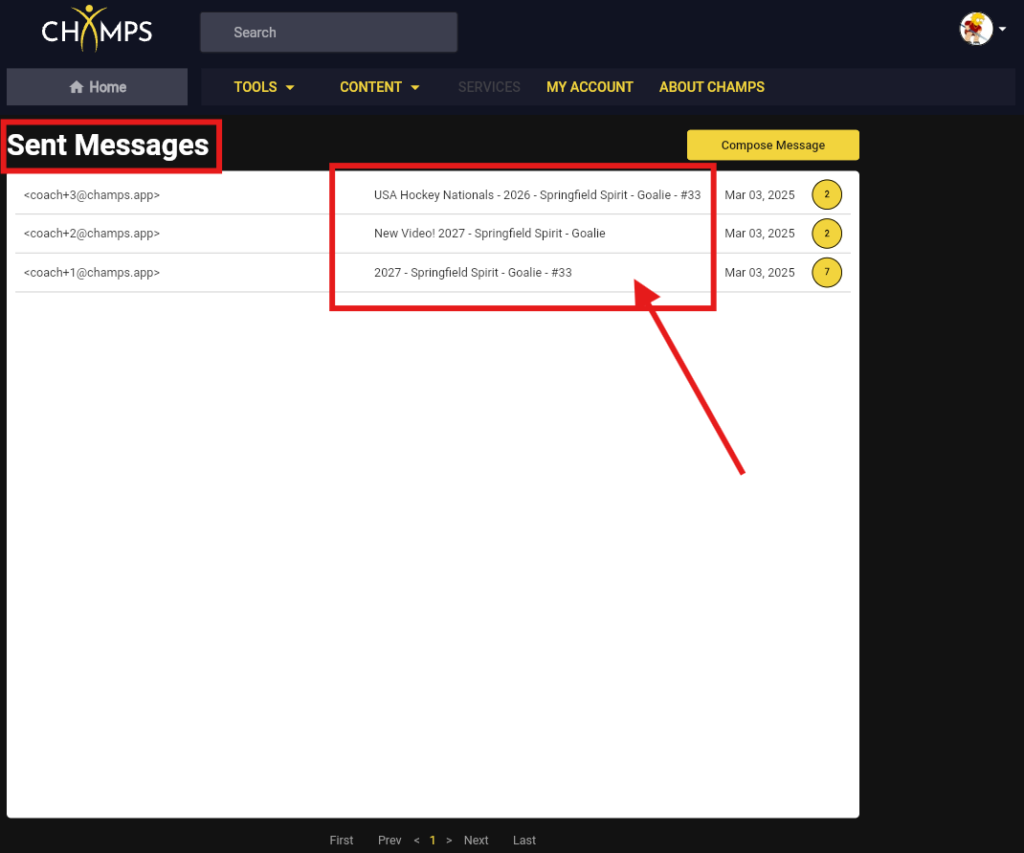
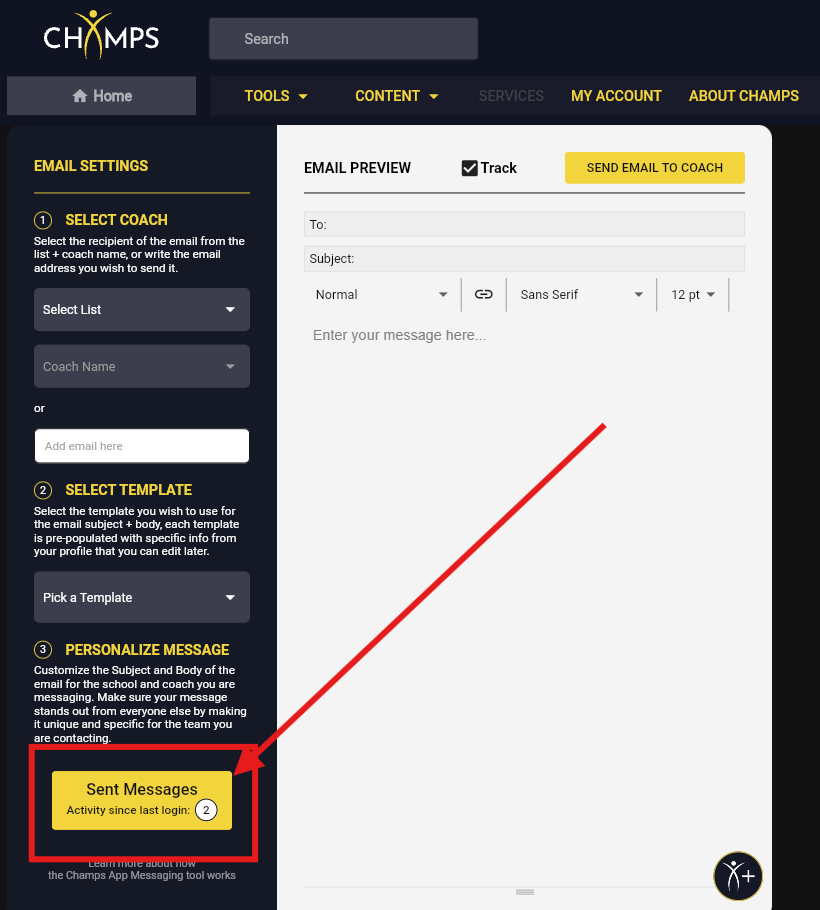
View your Sent Messages

Access all your past messages in one place. No more wondering what you sent!

 Save Personal Templates

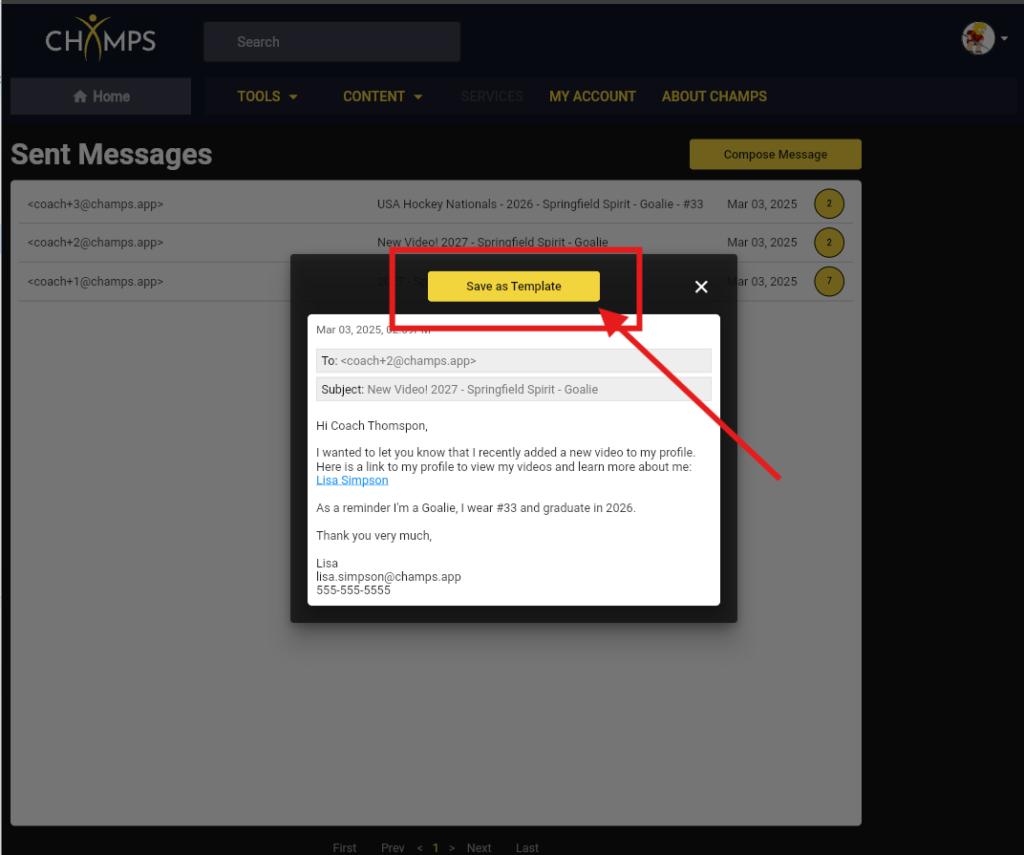
Customize once, reuse anytime! Quickly send personalized emails to multiple coaches without copy-pasting.

Track Email Activity

See when and how often your email is opened to gauge coach interest. 👀 (Note: Tracking may not work if the recipient has privacy settings enabled.)

Try Champs App Messaging 2.0 Now!

Categories
2025 Women's College Hockey Women's Hockey

Why the NEWHA Champion Should Have to Earn Their Spot Through a Play-In Game

This coming weekend all 5 conferences will be playing playoffs games with the conference winners getting automatic bids to the NCAA DI Women’s Ice Hockey Championship. This season will be the second year that the NEWHA conference champion will get an automatic bid to be one of the 11 NCAA playoff teams.  Being part of the women’s hockey playoffs would imply that that the NEWHA winner would be at least the 11th best team in DI women’s hockey – or at least close to it.  But that is not the case.  While the NEWHA conference champion has earned their spot in the playoffs, I am recommending that the lowest ranked conference champion have a play-in game.  Here is the rationale…

This season I have tracked every game the NEWHA conference teams have played against non-conference opponents.  The results aren’t pretty for the NEWHA teams – with the non-conference teams outscoring NEWHA  241-26. 

In fact, the best NEWHA team is not close to being a Top 15 in the polls and is essentially taking the sport of a much better team in the playoffs. So, Given the NEWHA regular season record versus non-conference teams, the Pairwise Rankings and MyHockeyRankings, the NEWHA teams continually rank near the bottom of all NCAA DI teams.   

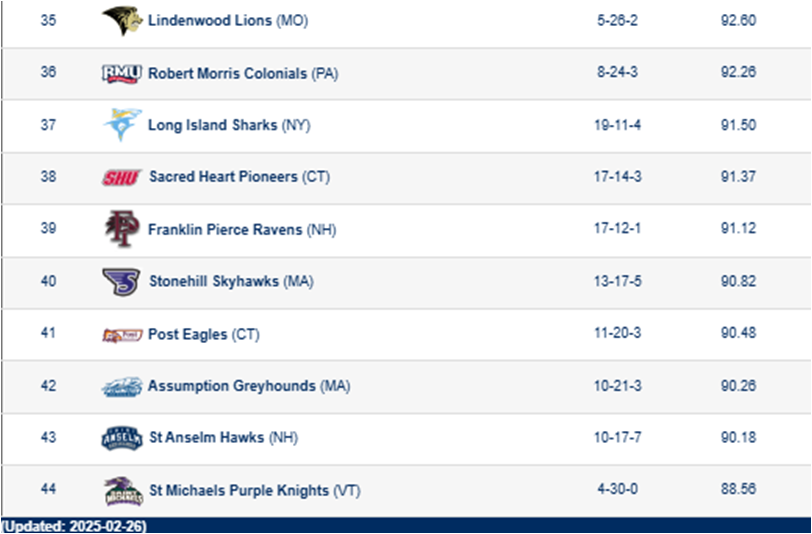
NCAA Women’s DI Hockey MyHockeyRankings as of 02-26-2025

In MHR, the entire NEWHA conference are the 8 bottom rated teams. 

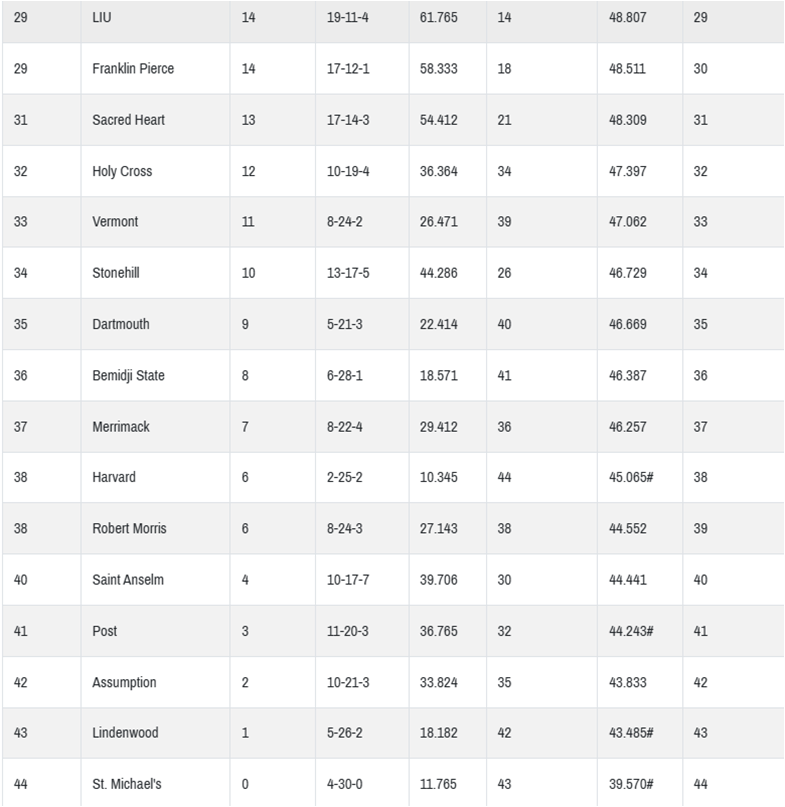
NCAA Women’s DI Hockey Pairwise Rankings as of 02-24-2025

And in the Pairwise, the best team is Long Island University at #28. But keep in mind the Pairwise weights “wins” heavily, and clear the top NEWHA teams like LIU beat the other NEWHA teams the most and thus boosted their ranking.  Pairwise seems to break down at the bottom of the rankings due to over-valuing bad teams beating each other. Given the data in my season-long analysis, I would use the MHR ranking as a better indicator of how good a team is relative to their peers.

In NCAA men’s basketball, there are play-in games featuring the last four at-large teams and the four lowest-seeded automatic qualifiers. I am recommending something similar, but just a single game. And yes, I am aware of the recent increase in the number of teams. The reason why there are only 11 teams in the current playoff format is to keep it proportional with the number of teams that make the men’s tournament.

Right now, if it very likely that three of the following four Top 15 teams won’t be in the playoffs – Quinnipiac (#9), Clarkson (#10), St Cloud State (#11) and Boston University (#12) unless they win their conference.  It’s a shame so many Top 11 teams won’t be in the playoffs. Having a play-in game would at least give one of these ranked teams a chance.  As a reminder, last year’s NEWHA champion, played the #7 seed Cornell and lost 7-1 in the opening round.

Given all this data, it seems inequitable that one (or all) of these Top 15 teams are not given a chance to compete in the national playoffs, when clearly a much weaker team (even though they won their conference) is being given the opportunity. A play-in game would at least make this more fair.

One last thought. Assuming Long Island University wins the NEWHA playoffs, they performed the best against non-conference opponents recently.  They only lost to Princeton (#15 in polls) 4-2, and vs. Robert Morris University (#38 Pairwise), LIU tied 1-1 and lost 3-1. But the reality is it would be unlikely any NEWHA team could beat any Top 11 team.